ON THE “GROUND” FROM AROUND THE WORLD Representative Office in New Delhi
In “On the ‘Ground’ from Around the World,” representatives working at JBIC’s offices around the globe talk about their work and life in their respective countries. This issue features KUROKI Sota, who is assigned to the JBIC Representative Office in New Delhi, India.
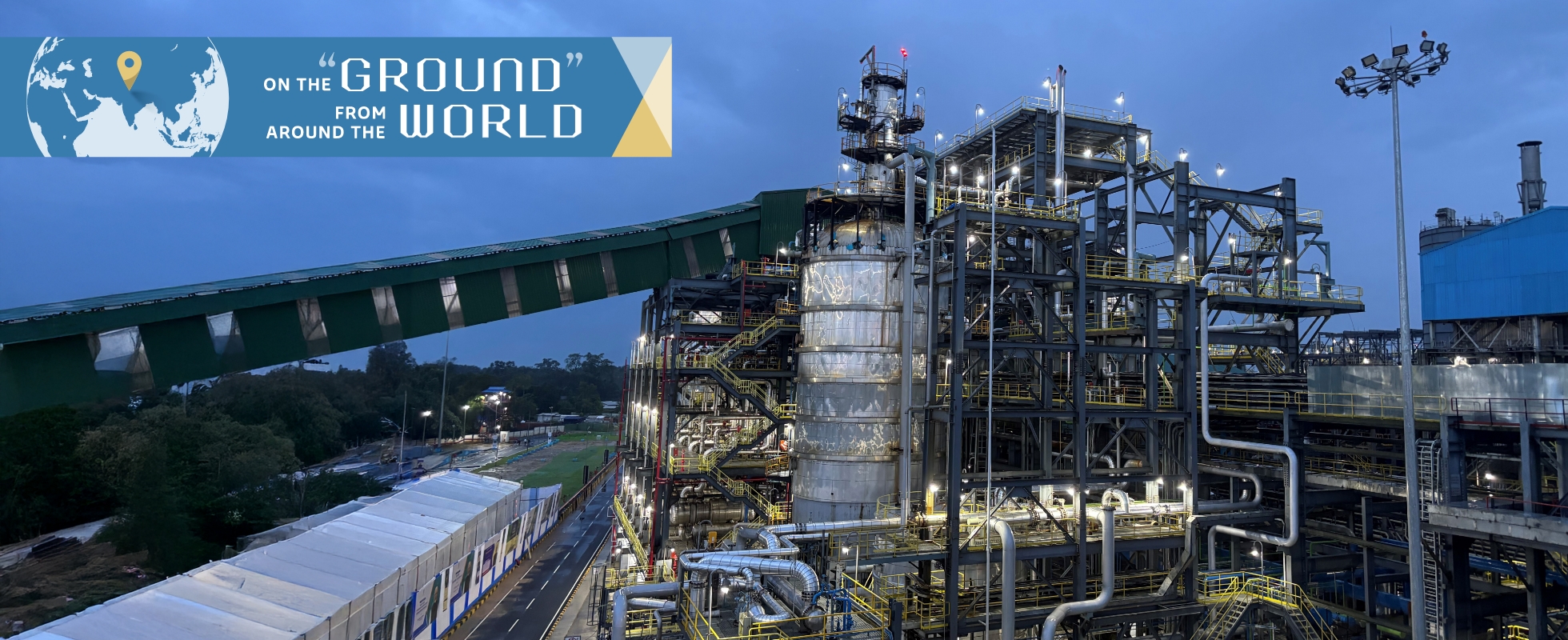
A bioethanol production plant in Assam, north-eastern India. JBIC is also supporting this project through a local financial institution.


Representative
JBIC Representative Office in New Delhi KUROKI Sota Joined JBIC in 2021. In New Energy and Power Finance Department I, he worked on management and structuring of power generation projects in Asia. A trainee at the New Delhi office for three months. Assumed his current position in September 2023.
 What kind of city is New Delhi?
 In Aerocity, where our office is located, office buildings and restaurants line the streets, which bustle with activity, even on weekends. Japanese tend to live in Gurgaon, known for its skyscrapers, but I live in central Delhi, famous for markets and historical sites.
What are the key features of your office?
Our office is responsible for six countries, including India. We build relationships with local governments and companies in a wide range of industries, including manufacturing, automobiles, renewable energy, and hydrogen, to support Japanese companies in business expansion. Many Japanese businesspeople visit India lately; we actively discuss the local situation and future strategies for business.
What are your responsibilities?
My main work is supporting the structuring of projects for India. Despite being a junior employee, I have invaluable opportunities to speak with state government officials and corporate executives as a JBIC representative.
Is India’s rapid growth tangible?
A lot of big changes have happened, even in my two years here. Skyscrapers and shopping malls are being constructed one after another, and I see more electric vehicles and luxury cars on the streets. But there are also still stark economic disparities and infrastructure weaknesses.
Can you tell us about the economic trends there?
Semiconductors and biofuels are in the spotlight. Japanese investment interest has been growing since an Indian company decided to build a semiconductor plant in the Dholera Industrial Area in Gujarat, in western India. Along with the National Industrial Corridor Development Corporation, in which JBIC holds shares, our office co-hosts site tours of Dholera Industrial Area.
India is also focusing on biofuels, utilizing various resources including cow dung, agricultural residues, and waste cooking oil. One notable JBIC-backed project is bioethanol production using bamboo in the northeastern state of Assam. This is expected to contribute to decarbonization and increased income for farmers.
What do you do on your days off?
I like to travel, and in my two years here, I have visited 18 of India’s 36 administrative divisions. Each has its own distinct culture and history, and I could spend a lifetime exploring them. I also take Indian cooking classes.
What are your career plans?
When I return, I aim to bring my experience building relationships with the local companies, and through project structuring, contribute to decarbonization, supply chain resilience, and deepening Japan-India relations. My goal is to become recognized both in JBIC and outside as “KUROKI, the go-to guy when it comes to India.”
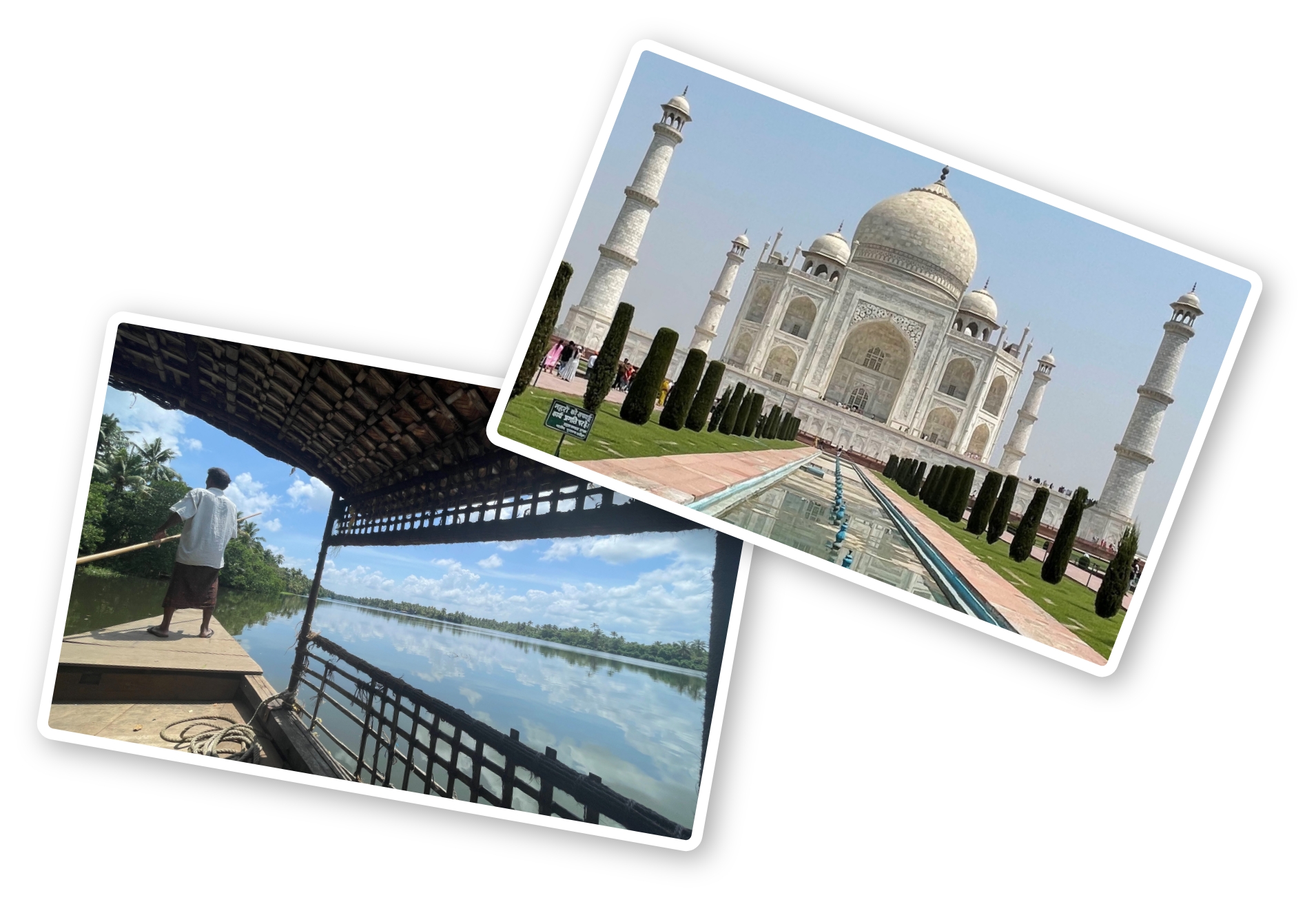

Right: Visited the Taj Mahal six times, making new discoveries each time.
Left: Kerala’s famous Backwaters. Boat cruises even offer overnight stays.
(Instagram Post)