



Feature ArticleCORPORATE STRATEGY AMID GEOECONOMIC RISKS

India has topped the ranking of promising countries or regions for business expansion for four consecutive years, with Vietnam placing third.
Amid sweeping changes to semiconductor supply chains, power transmission technologies capable of meeting surging electricity demand are emerging as major business opportunities.
Navigating this shifting landscape requires both adaptability and the painstaking cultivation of trust with local stakeholders.
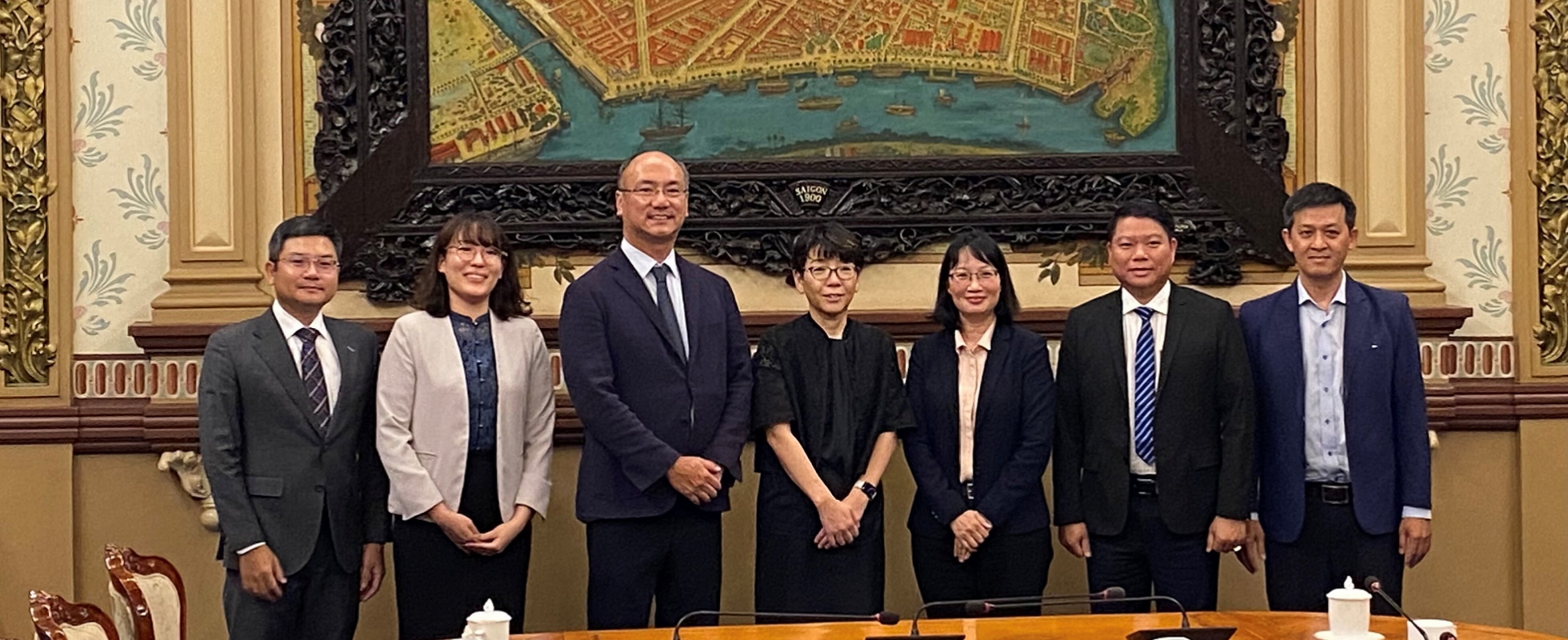
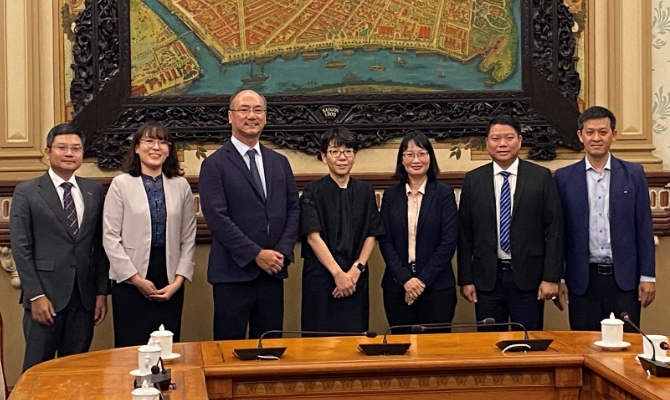
To strengthen collaboration in Vietnam, SAKUMA met with the vice-chairwoman of the Ho Chi Minh City People's Committee (SAKUMA is in the center). Developing relations with officials across the Asia-Pacific region is also a key part of her mission.
While pursuing economic self-reliance, India is actively welcoming cooperation with Japanese companies
Amid geopolitical shifts affecting the business environment, including trade tensions fueled by U.S. tariff policies, it is becoming ever more difficult for Japanese companies to make decisions about overseas expansion and investment.
However, where there is risk, there is opportunity, says SAKUMA Kazuko, JBIC's Resident Managing Officer and Regional Head for Asia and Pacific, who oversees a vast area from India in the west, to the Pacific region in the east, and Mongolia and China in the north. "How well we can respond to changes in the environment is crucial to getting through this era of uncertainty. I am optimistic that making the most of opportunities while minimizing risks will create genuine opportunities for Japanese companies to transform themselves."
India is the focus of attention in the Asia-Pacific. In the Survey Report on Overseas Business Operations by Japanese Companies—also referred to as the Global Landscape of Overseas Business Expansion (GLOBE)—conducted by JBIC in FY2025, India ranked first for the fourth consecutive year, cited by more than 60 percent of respondents as a promising country or region for business expansion.
The "Self-Reliant India" policy announced in 2020 aims to reduce import dependence and elevate the country's role in global supply chains. "India is promoting multilateral cooperation while avoiding dependence on specific countries and is also actively pursuing cooperation with Japanese companies. As more than 95 percent of India's businesses are mid-tier and small- and medium-sized enterprises, just like in Japan, I often hear that Indian counterparts want to learn from Japan's advanced technologies and industrial structure."
With an equity investment in the National Industrial Corridor Development Corporation (NICDC), JBIC is supporting the development of industrial parks in India. There is particular focus on attracting Japanese companies to the Dholera Industrial Area, which aims to become a semiconductor hub. This smart city development in western India is a flagship zone in the government-led Delhi Mumbai Industrial Corridor project, with Japanese companies showing strong interest.
As indicated by the GLOBE survey results, many Japanese companies wish not only to export products to this promising market but also to establish manufacturing bases there. However, some companies remain hesitant due to the complexity of legal and regulatory frameworks that vary from state to state, as well as underdeveloped inter-city infrastructure.
In response to such challenges, SAKUMA says that JBIC also serves as a bridge, consolidating feedback on matters such as regulatory frameworks, the development of industrial parks, and improvements to living infrastructure, and engaging with officials at the central and state governments. "We play an important role in not only providing loans, but also helping to remove barriers to market entry."
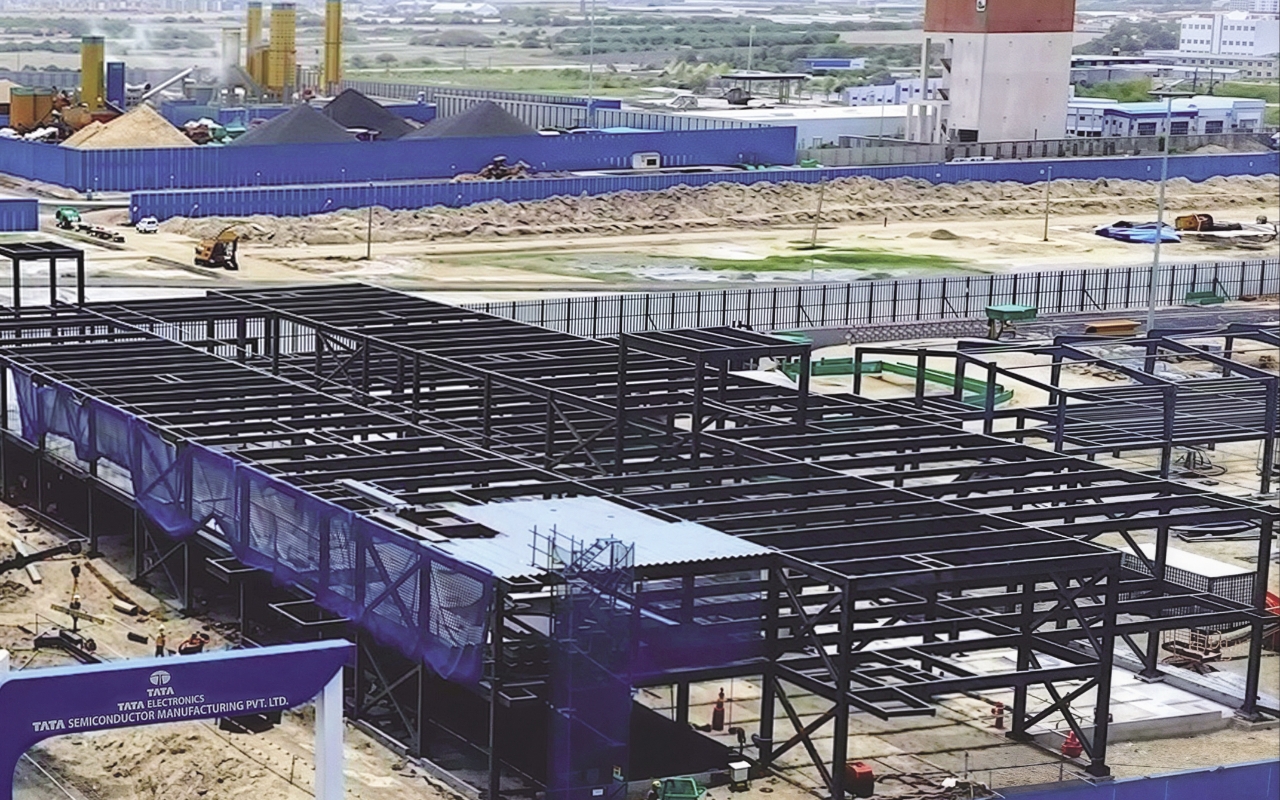
The Dholera Industrial Area is being developed as a hub for next-generation semiconductors. Tata Electronics, a major Indian semiconductor company, is also constructing a fabrication plant there.
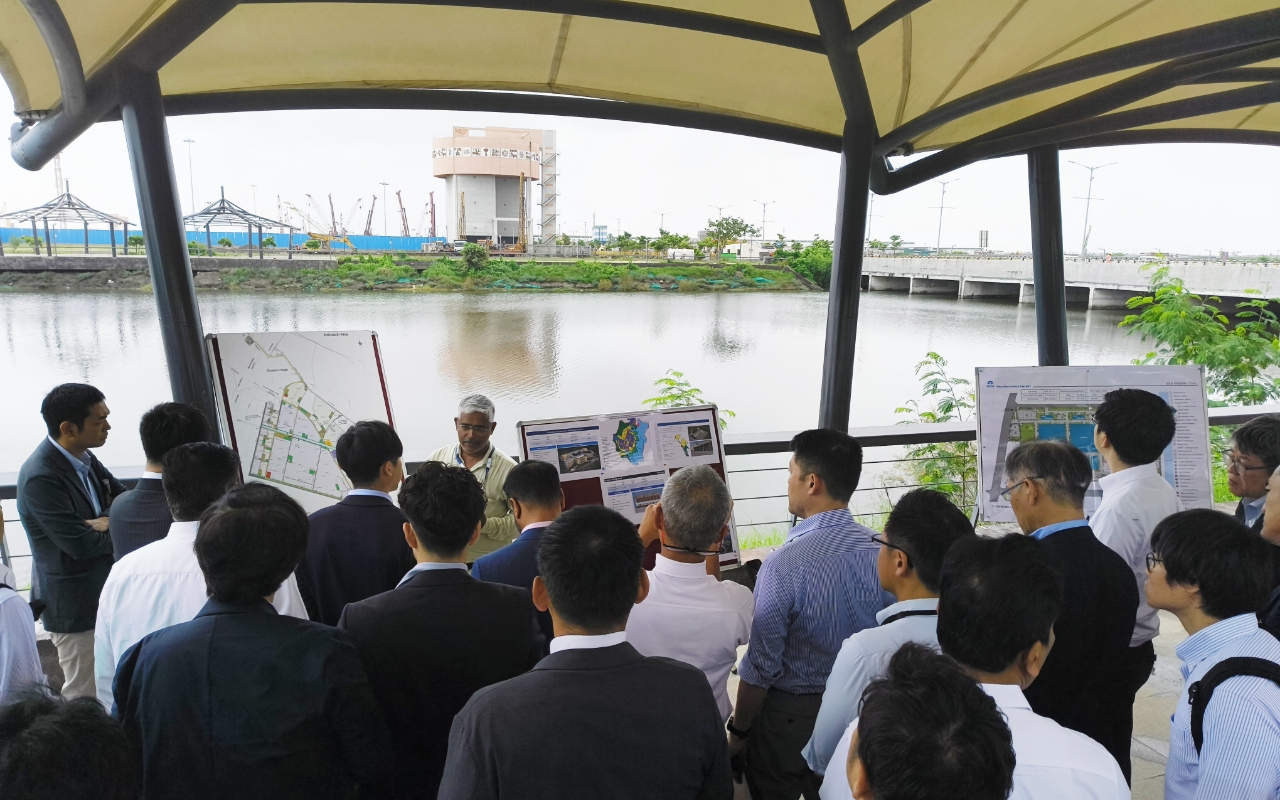
Reflecting strong interest in the Dholera Industrial Area as a semiconductor manufacturing hub, 36 Japanese companies participated in a JBIC study tour in July 2025.
Vietnam's manufacturing boom brings new challenges
Vietnam is also becoming a major beneficiary of supply chain realignment. "Against the backdrop of U.S.-China tensions, companies from Japan as well as from South Korea, Taiwan, and Singapore are accelerating efforts to shift manufacturing bases from China to Vietnam. This trend will probably continue for the foreseeable future."
With overseas companies concentrated in northern Vietnam, near the Chinese border, new challenges are surfacing: labor shortages and soaring wages. The labor-intensive model built on an inexpensive and hardworking workforce, which used to be Vietnam's strength, is reaching its limits, meaning that automation and higher-value manufacturing are becoming unavoidable.
JBIC's primary focus in Vietnam is a public-private dialogue framework established under the Asia Zero-Emission Community (AZEC), a Japan-led platform aimed at achieving decarbonization. JBIC serves as team leader together with the Embassy of Japan in Vietnam and Vietnam's Ministry of Industry and Trade, working with 46 Japanese companies to improve energy policies and support individual projects. In March 2025, 15 projects worth approximately USD20 billion were selected for the first round.
However, negotiations with the Vietnamese side are not straightforward. SAKUMA candidly says, "Decisions on large-scale projects take time, making patience, grit, and tenacity essential. We diligently maintain communication with people from the top echelons of government down to administrative staff, striving to build trust that will allow dialogue at all times."
Energy is a challenge not confined to Vietnam but shared across the entire region. In Asia, beyond growing demand for electricity spurred by economic growth, the rapid rise of the AI industry in recent years is fundamentally transforming the situation. Malaysia and other Southeast Asian countries are raising their presence as AI hubs, ramping up efforts to attract data centers and semiconductor investment, leading to strained electricity supplies.
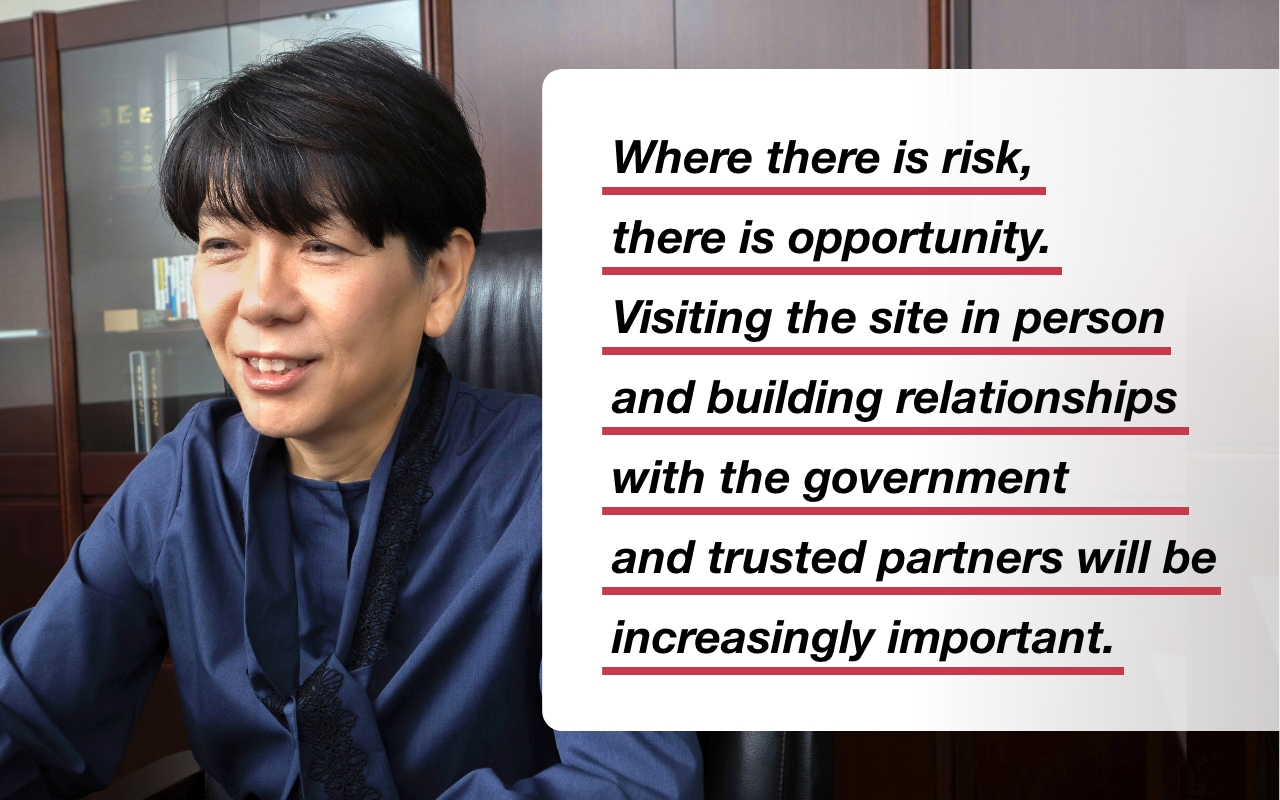
Resident Managing Officer, Regional Head for Asia and Pacific, JBIC, SAKUMA Kazuko
Weighing value and risk through due diligence
To meet this rising demand, discussions on strengthening power supply are shifting into high gear across the ASEAN region. At the core is the ASEAN Power Grid (APG) initiative, which aims to enable regional power-sharing. Malaysia, the ASEAN 2025 chair, is promoting this initiative, drawing on its capacity to supply renewable energy and its geographic connectivity to neighboring countries.
SAKUMA sees the confluence of two trends—rising power demand and the shift to clean energy—as opening up business opportunities in ASEAN in the fields of power generation and power transmission. Notably, business opportunities could be found in high-voltage direct current (HVDC) transmission, which is more energy efficient than alternating current in long-distance transmission. Japanese companies are highly competitive globally in the development, operation, and maintenance of such systems, as well as in the manufacture of converters, transformers, cables, and other related products.
A broad, region-wide perspective is important when evaluating investment opportunities in Asia-Pacific. The era of investment decisions based on analyzing a single country is over. Underlying this is a broader shift: countries are avoiding single-nation dependence and deepening cooperation with like-minded partners. Beyond moves toward multilateral collaboration in building critical minerals supply chains, in which Australia plays a central role, there are also various geopolitical factors behind the actions of the relatively small economies of the Pacific region, making constant vigilance essential.
"Comprehensive due diligence on the value and risks of an investment target is required."
However, it is not realistic to exclude countries that think differently. "We need to collaborate by balancing technological capabilities and resources while keeping economic viability in mind."
This sense of balance is becoming increasingly important as the AI revolution reshapes the industrial structure. As it will be difficult for Japan to maintain its competitiveness through traditional technological strengths and quality alone, it is critical to maintain good relationships with the other Asia-Pacific countries, with which it shares close geographical and historical ties.
SAKUMA reiterates the importance of site visits and dialogue with trusted local counterparts as keys to swiftly expanding operations while leveraging Japan's reputation for thorough and reliable business practices. "It is essential to have channels of communication to make your position clear while respecting local business practices and culture."
SAKUMA encourages companies to make greater use of JBIC and other government institutions for clear understanding of the situation in the Asia-Pacific region. It is precisely in this era of uncertainty that opportunities for transformation arise—her words will be a message that will resonate strongly with companies looking to expand business in the region.
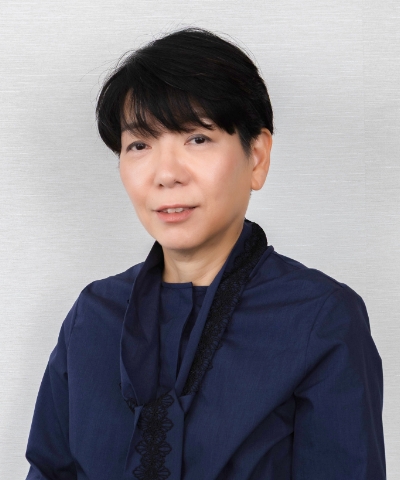

Resident Managing Officer, Regional Head for Asia and Pacific, JBIC
SAKUMA Kazuko
Joined JBIC in 1994. After serving in posts including Director General of the Mining and Metals Finance Department, Director General of the Oil and Gas Finance Department, and Managing Officer and Director General of the Human Resources Management Office, she assumed her current position in June 2024. Graduated from the University of Tokyo, Faculty of Economics.

