



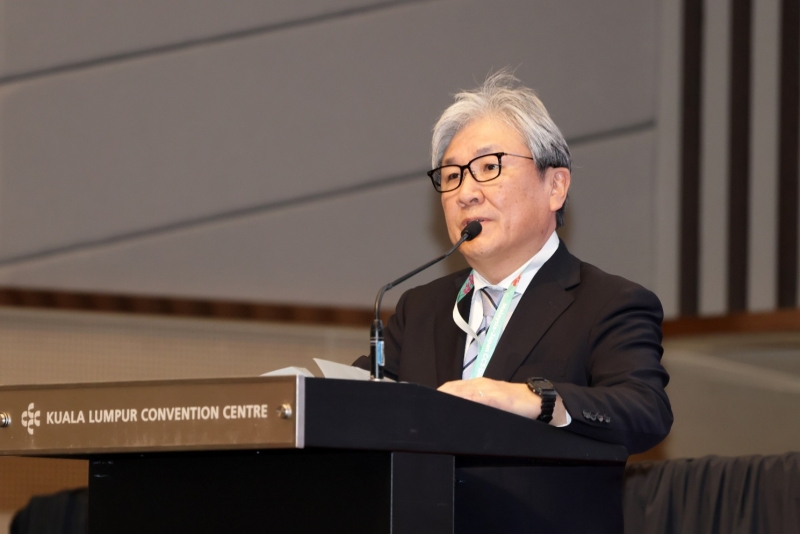
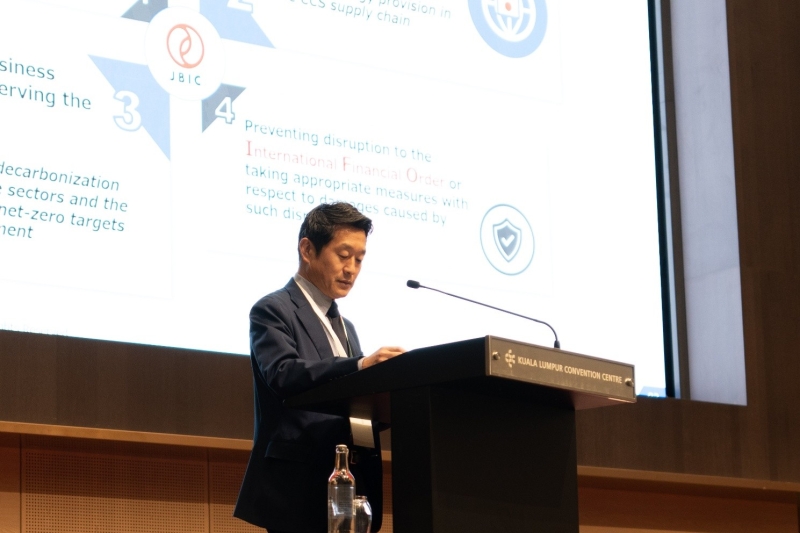
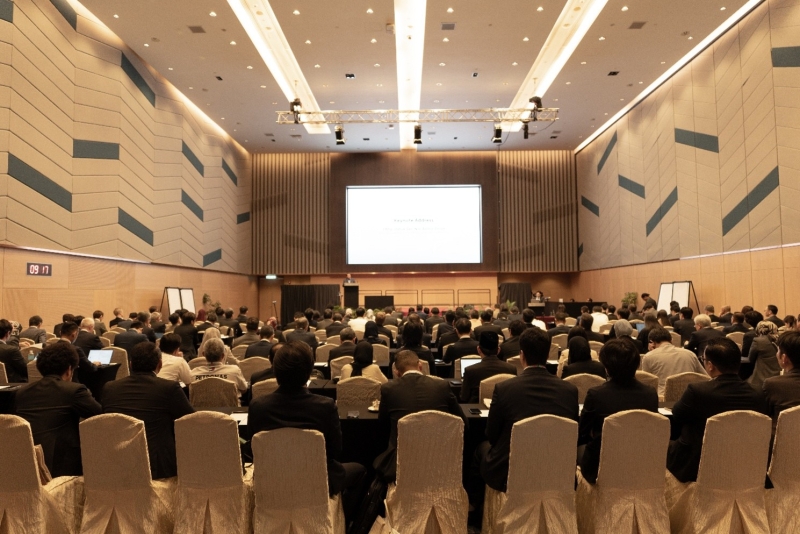
Japan Bank for International Cooperation (JBIC) and Petroliam Nasional Berhad (PETRONAS) hosted the Malaysia–Japan CCS Dialogue in Kuala Lumpur, Malaysia, from February 11 to 12, 2026. This Dialogue was organized, in line with the Memorandum of Understanding between JBIC and PETRONAS, which was renewed in October 2025*1, to advance the realization of cross-border carbon capture and storage (CCS*2) projects between Japan and Malaysia.
The Dialogue was attended by representatives from JBIC, PETRONAS, the Ministry of Economy of Malaysia (MOE), the Ministry of Economy, Trade and Industry of Japan (METI) , the Embassy of Japan in Malaysia, as well as more than 30 companies and institutions, primarily from Japan and Malaysia, bringing total participation to over 150 attendees. The program included presentations by MOE, METI, PETRONAS, JBIC and participating companies followed by active discussions in panel sessions on topics such as policy and regulatory frameworks; CCS value chain development, including related infrastructure; risk and liability frameworks; and bankability issues for establishing cross-border CCS projects.
The government of Malaysia has announced its goal to reduce 45% carbon intensity against GDP by 2030 compared to the 2005 baseline and to achieve net zero emissions by 2050. In the National Energy Transition Roadmap (NETR), launched in 2023, Carbon Capture, Utilization and Storage (CCUS) is identified as one of six energy transition levers to accelerate decarbonization.
The Japanese government, in the Seventh Strategic Energy Plan (approved by the Cabinet in February 2025), has set forth its policy to establish a globally competitive CCS value chain and to strengthen the ability of Japanese CCS-related companies to secure orders for CCS projects worldwide. Furthermore, in the Sector-Specific Investment Strategies (revised in December 2025) developed under the Strategy for Promoting Structural Transition based on Decarbonization (GX Promotion Strategy), the government has designated CCS as one of the 16 priority areas, and intends to promote CCS projects overseas. JBIC also has positioned CCS/CCUS as one of the priority areas under the Fifth Medium-Term Business Plan (FY2024–2026) within the Key Focus Area of “Realize a Sustainable Future,” with the aim of contributing toward realizing both carbon neutrality and economic growth.
PETRONAS is Malaysia's global energy and solutions partner with presence in over 100 countries. The company has been proactively advancing decarbonization initiatives, including CCS, as part of its commitment to achieving net-zero emissions by 2050. PETRONAS is progressing the development of a CCS hub offshore Peninsular Malaysia, with the ambition of positioning the country as a leading CO₂ storage hub in the Asia-Pacific region. By combining these initiatives with the technologies, expertise, and capabilities of Japanese companies, the Dialogue seeks to create collaboration opportunities that contribute to the early realization of cross-border CCS projects between Japan and Malaysia, thereby supporting the achievement of decarbonized societies in both countries.
JBIC will continue to support initiatives for global environmental conservation and sustainable development as a policy-based financial institution of Japan, leveraging its strong partnerships with foreign governments and state-owned enterprises. JBIC will also remain committed to fostering international business opportunities for Japanese companies.
Note
- *1
- *2
Carbon dioxide Capture and Storage (CCS) is a technology that separates and captures carbon dioxide that would otherwise become a greenhouse gas and stores it in deep waterbeds or geological formations.