OUR GLOBAL CHALLENGES Kyoto Fusioneering Ltd.
Fusion energy is in the limelight now as a sustainable, next-generation energy that emits no carbon dioxide. Kyoto Fusioneering is taking on the challenge of creating a sustainable future by leveraging its comprehensive engineering technologies.
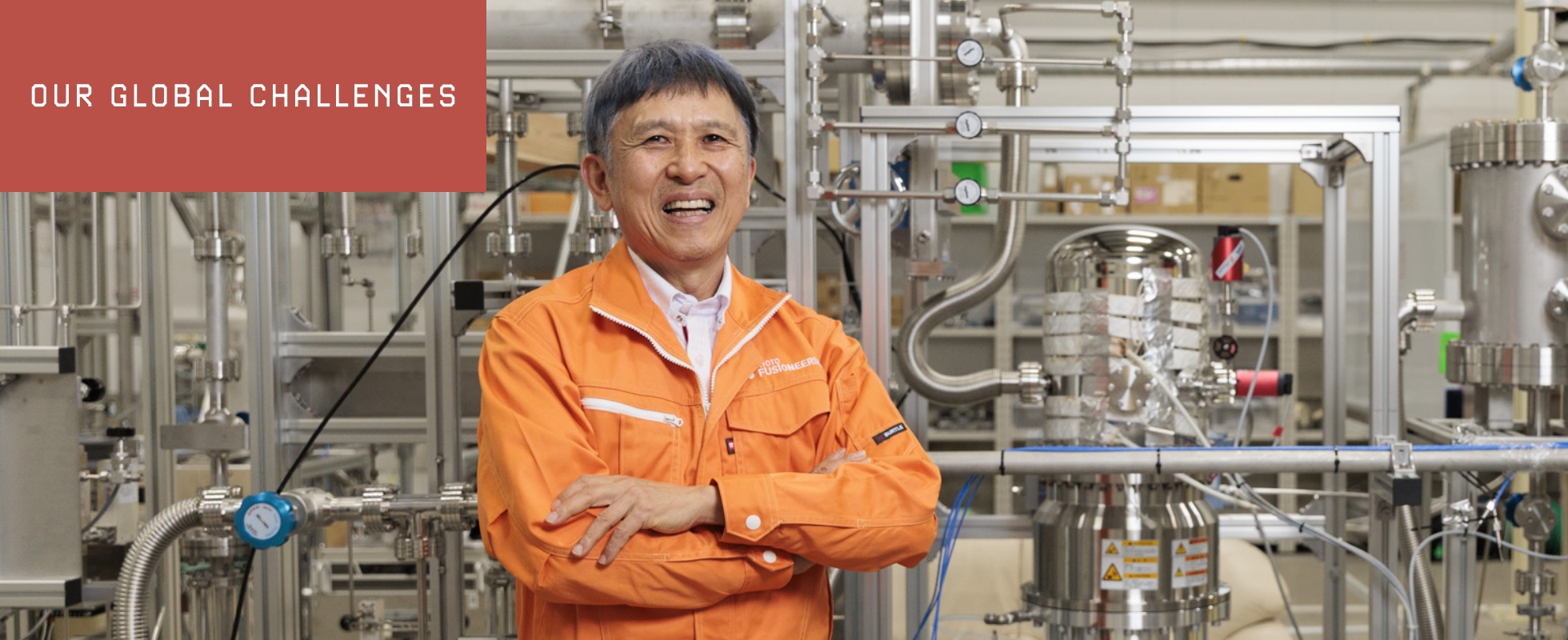
CEO & Chief Fusioneer
Kyoto Fusioneering Ltd.
KONISHI Satoshi
Professor Emeritus, Kyoto University. PhD in Engineering, the University of Tokyo. Following a career at the Japan Atomic Energy Research Institute (now the National Institute for Quantum Science and Technology), became a professor at the Institute of Advanced Energy, Kyoto University, in 2003. A specialist in fusion energy development, including fusion device technologies and engineering. Co-founded Kyoto Fusioneering in 2019 and has held his current position since 2023.
Amid a zero-carbon shift, dreams are approaching reality
“Hundreds of millions of people on Earth are still unable to use electricity. If fusion energy is fully deployed, everyone will have unimpeded access to sustainable energy.”
This is the future envisioned by KONISHI Satoshi, CEO of Kyoto Fusioneering. KONISHI has been working on fusion for over 40 years at a research institute and Kyoto University. He established the company in 2019 as a Kyoto University startup with the aim of realizing fusion energy, often referred to as “dream energy.”
Fusion energy is the thermal energy released when deuterium and tritium—both isotopes of hydrogen—are heated at high temperatures into a plasma, causing nuclear fusion. This process is similar to that occurring inside the Sun, allowing an enormous amount of energy to be produced from a small amount of fuel. Because deuterium exists in abundance in seawater, and no carbon dioxide is emitted during power generation, there are high hopes for fusion energy as a game-changer in energy security and decarbonization.
Fusion research began in the 1950s, followed by a lull and then a resurgence in the 2010s. As concerns around climate change surged, so did the number of startups. Kyoto Fusioneering is a leader in this still highly competitive and rapidly developing field.
Beginning with its four co-founders, the company now has about 160 employees ranging in age from their 20s to 70s, including international staff. In addition to researchers and engineers, there are also personnel with experience in trading companies and consulting firms.
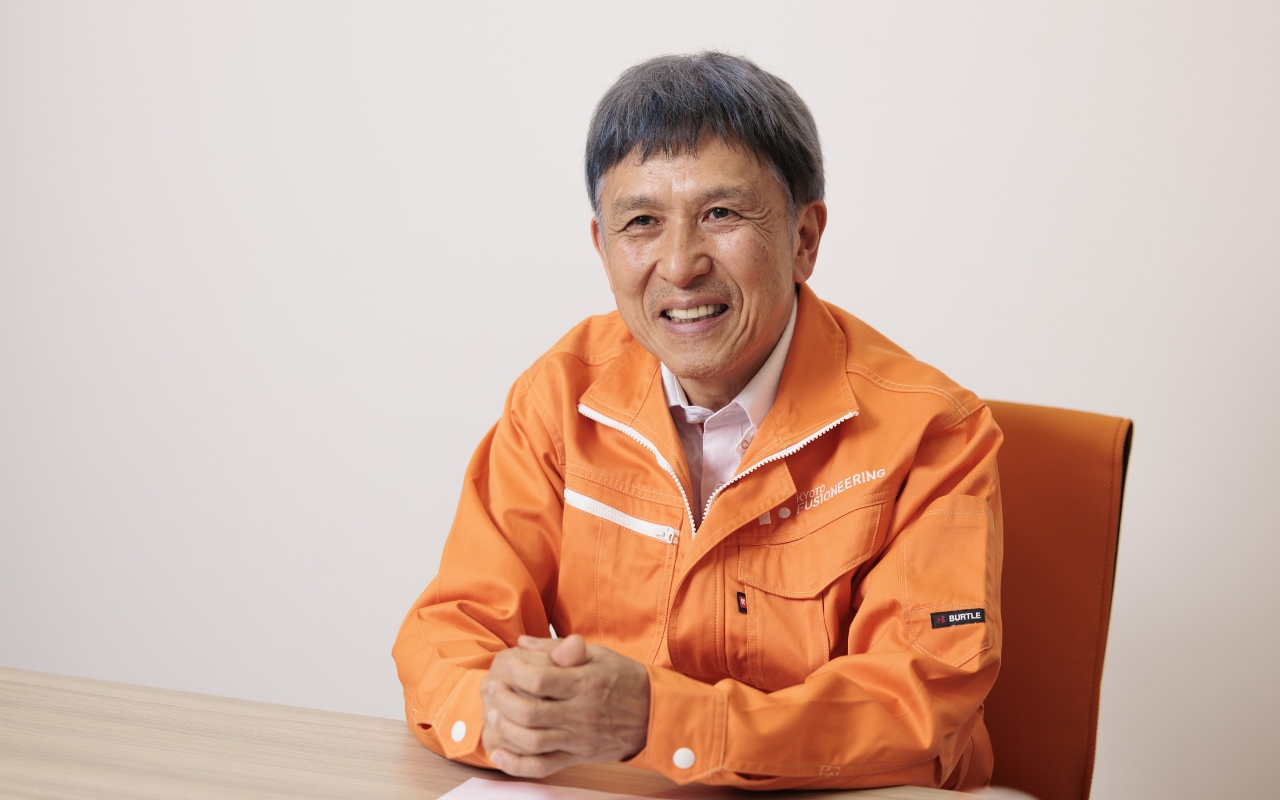
KONISHI states that if a fusion supply chain that harnesses Japan’s manufacturing expertise can be built, Japan will gain a competitive edge in the world.
KONISHI reflects on the company’s founding: “For a long time, it was said that fusion would take another 20 or 30 years to achieve. When I thought about what was preventing it from being put into practical use even though we were just a step away, I realized it wasn’t just about the technical apparatus; a ‘social apparatus’ was also necessary. Gathering people, raising capital, coordinating experts in various specialized fields, and running projects as a business—that’s an organization called a company. Such an organization hadn’t existed even for large-scale science and technology projects in Japan. My thinking was that by creating a company, we could make the impossible possible.”
Kyoto Fusioneering’s primary business is the design and marketing of fusion-related technologies and systems, operating without its own factory. Its clients are research institutions and companies around the world aiming to achieve fusion, and its goal is to build a supply chain centering on Japan’s manufacturing companies.
“Achieving fusion energy requires complex equipment, and Japan’s manufacturing technologies are world-class. Our business model involves combining the technologies possessed by various companies, from small factories to large corporations, to build such equipment and, at the same time, providing solutions to the world’s fusion challenges. A country that builds such a supply chain will gain a competitive edge in the fusion energy market. In other words, if our business succeeds, Japan can supply fusion technology to the world and gain a position comparable to that of the current oil-producing nations.”
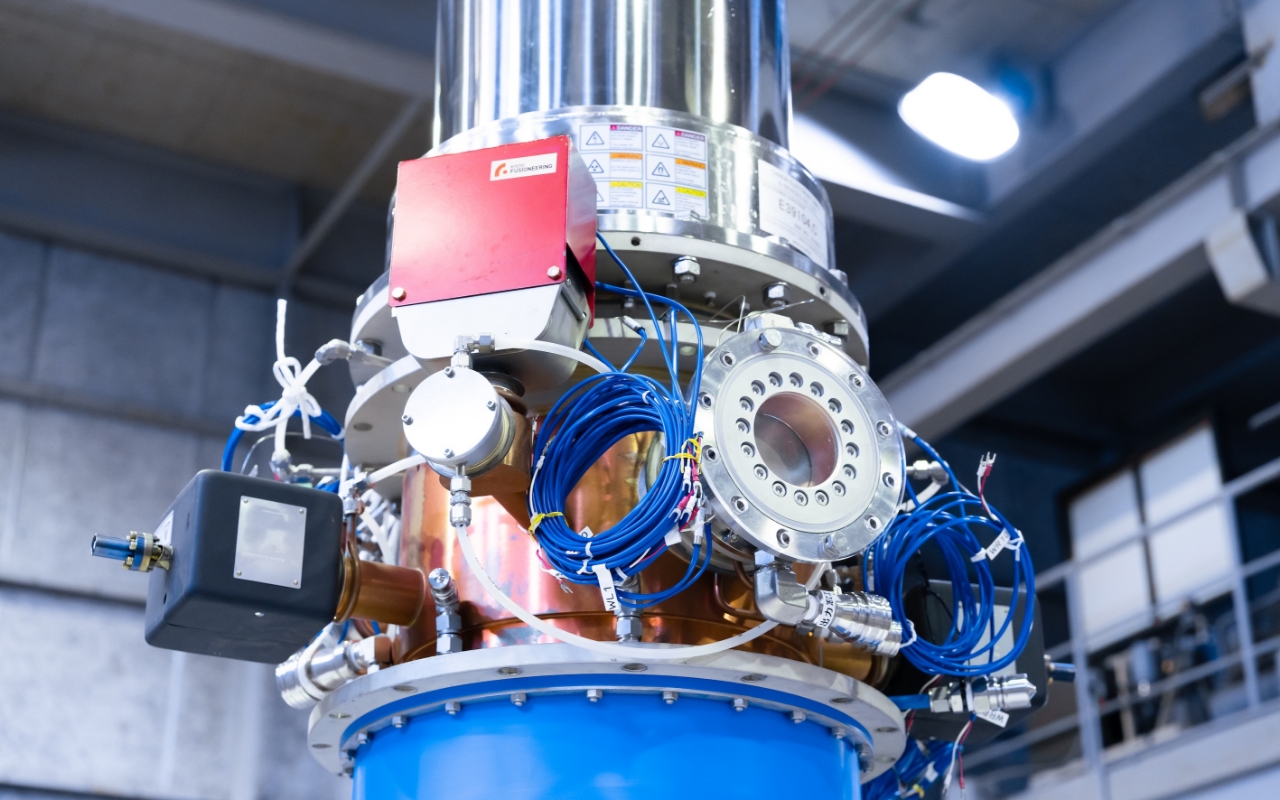
A gyrotron is a device that heats fuels such as tritium to a plasma state and uses microwaves to heat the plasma to over 100 million degrees Celsius, creating the high-temperature conditions necessary for fusion reactions.
Partnering with the Canadian institute to combine expertise for demo test
That said, fusion technology is not something that can be developed by one country alone. Accordingly, Kyoto Fusioneering has established cooperative international relationships from an early stage. In 2021, it received an order from the UK Atomic Energy Authority for a gyrotron, which is used to heat plasma. That same year, it established a UK subsidiary and expanded its business by utilizing a JBIC loan.
In 2022, the company established a local subsidiary in the U.S., followed by one in Germany in 2024. “Our years of experience allow us to understand what is needed, by whom, and in what country. While keeping in mind what specific systems and technologies are lacking, we prioritized the creation of ‘marketable products’.”
Also in 2024, it established Fusion Fuel Cycles Inc., a joint venture with Canadian Nuclear Laboratories (CNL). Utilizing support from JBIC, this company is developing a fusion fuel cycle system in partnership with CNL, which has extensive experience in tritium processing technology. Demonstrations are planned to be held at the integrated test facility UNITY-2.
In this way, Kyoto Fusioneering was quick to engage in building a supply chain that harnesses Japan’s manufacturing expertise. “Because we took the lead here, other countries are taking the stance of collaborating, rather than competing, with Japan. We receive a lot of requests for cooperation, especially from the U.S. and Europe.”
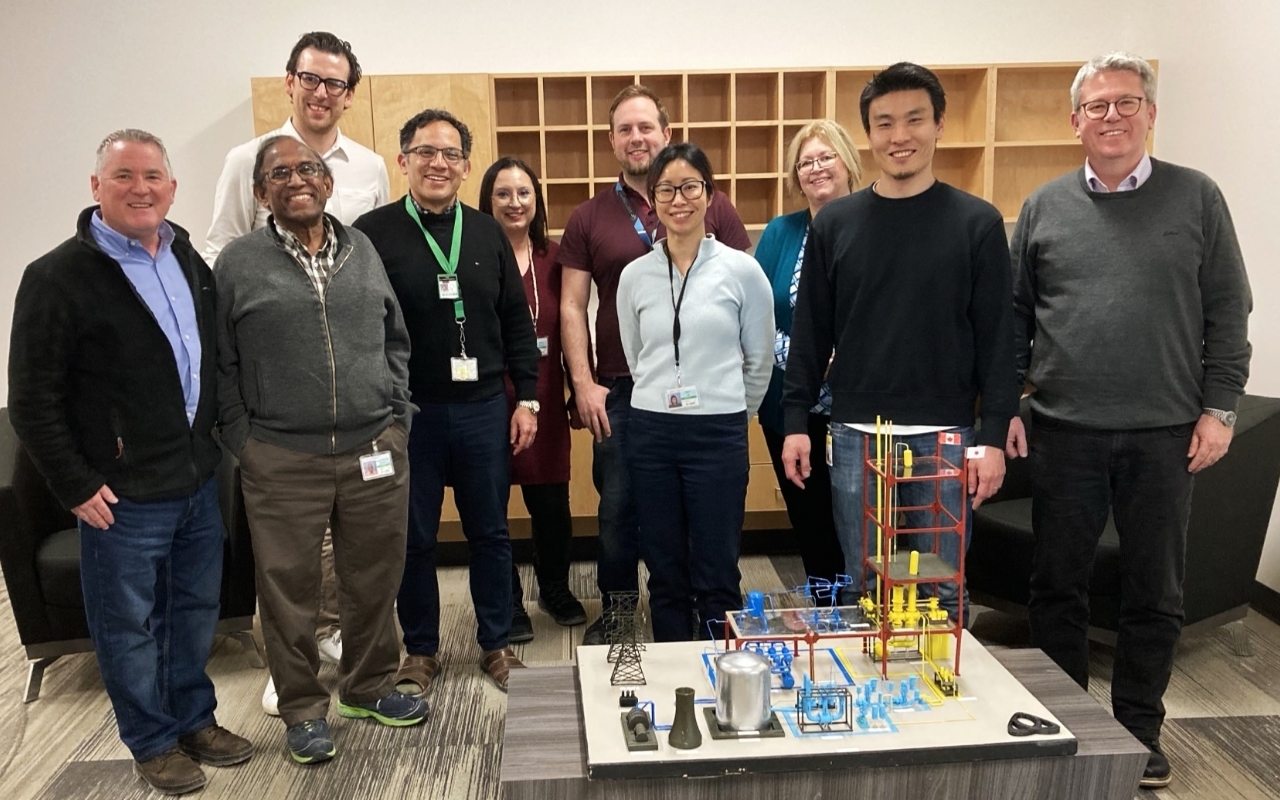
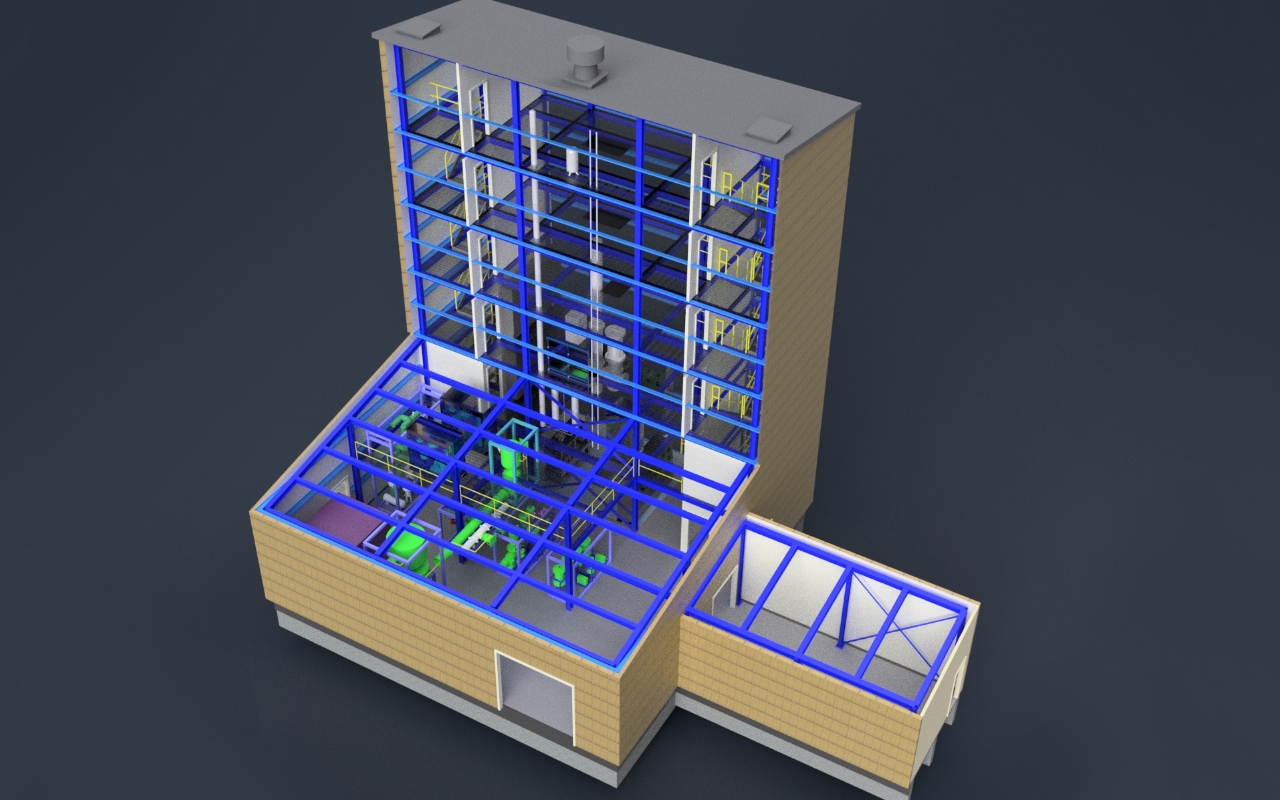
Staff members of the Canadian joint venture established in 2024. The model on the table is UNITY-2, the integrated test facility for the fusion fuel cycle system, which is being developed by the company (its overall image is shown below).
Despite becoming a potential unicorn in just six years, many challenges remain. “Each country has its own science and technology and energy policies as well as business practices; we need to understand these and then respond appropriately.” Advanced technologies are also subject to export approval, requiring a great deal of work for export permits. Technological security and protection of intellectual property are also major considerations. “But this situation also works to our advantage as we have expert staff who can ably handle complex export procedures.”
Kyoto Fusioneering is also spearheading FAST (Fusion by Advanced Superconducting Tokamak), an industry-academia collaborative project that aims to demonstrate fusion energy power generation in Japan by the mid-2030s. KONISHI is nearly 70, and though he is still actively working and busy traveling both within and outside Japan, he hopes to pass on his know-how to the next generation, who will lead the field in the future.
“My personal goal is to build a system that generates and uses stable energy while maintaining a balance with the global environment in order to ensure the survival of humanity. During my lifetime, I would like to see with my own eyes a fusion plant that is operating and supplying electricity to the world.”
Kyoto Fusioneering Ltd.
| 2019 | Kyoto Fusioneering Ltd. founded |
|---|---|
| 2021 | Kyoto Fusioneering UK Ltd. established |
| 2022 | Kyoto Fusioneering America Ltd. established |
| 2024 | Kyoto Fusioneering Europe GmbH established |
| 2024 | Fusion Fuel Cycles Inc. established as a joint venture with Canadian Nuclear Laboratories |
| 2025 | R&D center opened in Tokyo Ryutsu Center. Headquarters relocated here |


In March 2022, a loan agreement was signed with Kyoto Fusioneering UK Ltd. for a total of GBP650,000 (JBIC portion: GBP455,000). In September 2025, a loan agreement was signed with Fusion Fuel Cycles Inc., a joint venture established in Canada with Canadian Nuclear Laboratories, for a total of CAD20 million (JBIC portion: CAD10 million). Through these loans, JBIC supports the overseas business expansion of Japanese companies engaged in energy transition.