OUR GLOBAL CHALLENGES Taiyo Koko Co., Ltd.
Ongoing global uncertainty raises concerns about a stable supply of rare metals for import-dependent Japan. Century-old Taiyo Koko Co., Ltd., embarks on a new challenge to increase self-sufficiency by building its own recycling plant overseas and importing the recovered metals back to Japan.
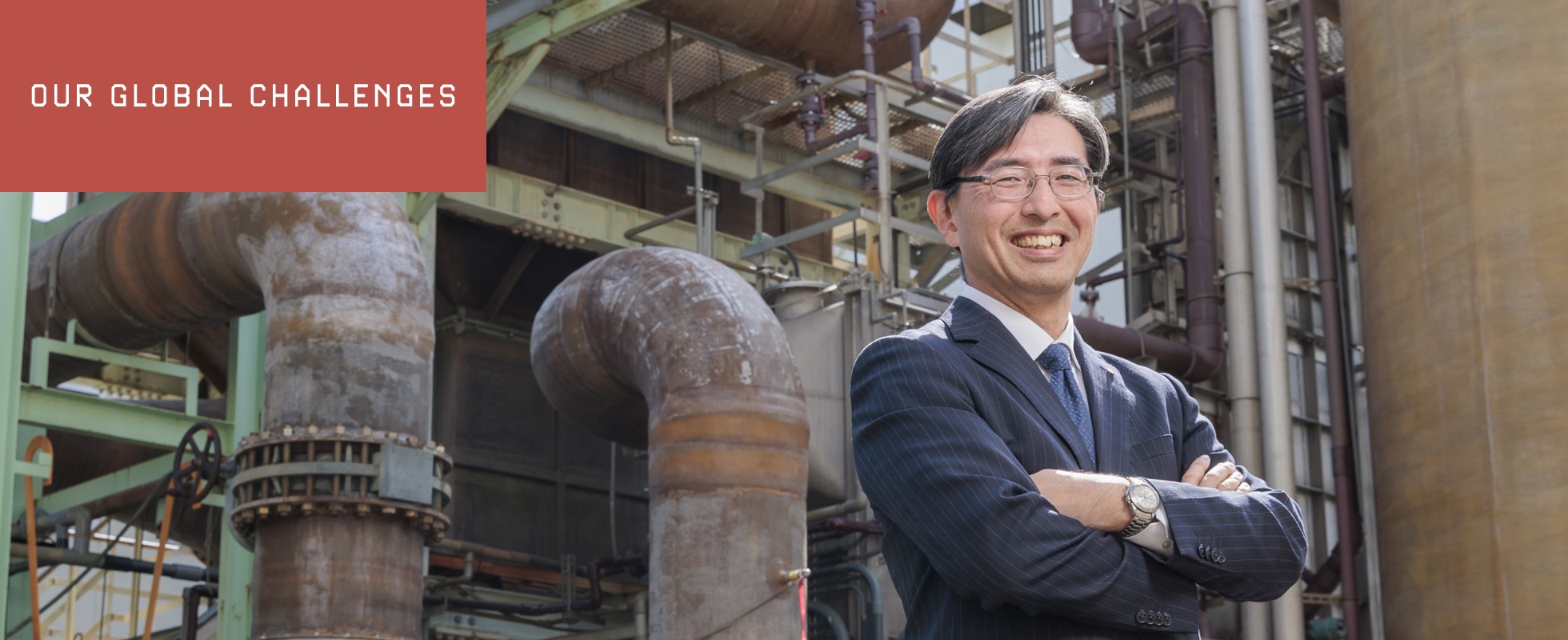
President
Taiyo Koko Co., Ltd.
SUZUKI Kazufumi
After graduating from university, he worked for a general trading company. Posted to Malaysia and Taiwan, he was engaged mainly in the procurement of non-ferrous metals. He joined Taiyo Koko Co., Ltd. in 2013 and assumed his current position in 2018 after holding several posts, including general manager of the Research & Development Department. He concurrently serves as a director of Nichirin Co., Ltd. and as an Audit and Supervisory Board Member of Nippon Fine Chemical Co., Ltd.
Strength born from proprietary technology used for supply chain resilience
Raw metal materials supplier Taiyo Koko is launching a recycling business in Malaysia that leverages its core recycling technology to recover rare metals from used heavy crude oil desulfurization catalysts. With the initial investment totaling more than JPY10 billion, it will take more than a decade to recoup the cost. Although there was some opposition from within the company calling it "a risky proposition," SUZUKI Kazufumi, the company's president, decided to move forward, saying that "it's even riskier to be a latecomer to the market."
Construction of the recovery plant is now underway at an industrial park in Kuantan, Pahang, on the east coast of Peninsular Malaysia, with plant operations slated to begin in 2027. The plant is designed to separate and recover molybdenum and vanadium from spent catalysts discharged from the country's largest oil refinery. Molybdenum and vanadium are used across a wide range of areas, including automobiles, aircraft, steel frames supporting buildings, and electronic components, making them indispensable resources in the modern world. All recovered molybdenum and vanadium will be exported to Japan and processed into products at the company's domestic plants.
Taiyo Koko has a history dating back to 1919. It was founded as a subsidiary of the general trading company Suzuki & Co., Ltd., and was reestablished under its current name in 1949. The company grew by manufacturing a wide variety of materials.
A major turning point came in the 1970s, when the company developed recycling technology to recover rare metals from spent catalysts. Taiyo Koko now manufactures about 4,000 tons of molybdenum and 2,200 tons of vanadium a year, with recycled sources accounting for 17 percent and 35 percent, respectively. The company also has a competitive edge, as the rare metals it recovers through its proprietary technology boast a purity of 99.9 percent.
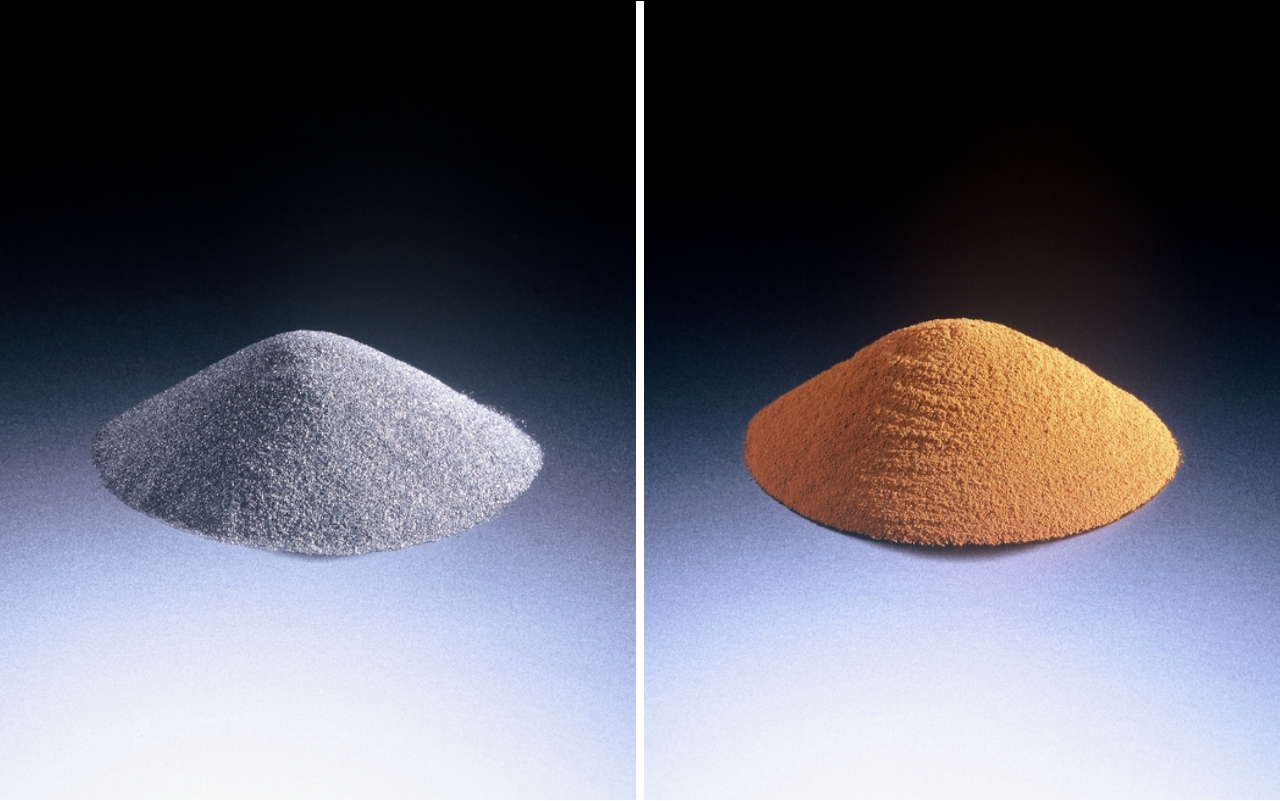
The Malaysia plant will manufacture molybdic acid (left) and vanadium pentoxide (right), both of which will be exported to Japan for processing.
Meeting strict environmental standards and helping build a circular economy
Taiyo Koko sources molybdenum from the United States and Chile, and vanadium from China and Brazil, but concerns over their stable supply have been growing amid geopolitical uncertainty.
"With the production of rare metals disproportionately concentrated in a handful of countries, Japan has been relying almost entirely on imports," says SUZUKI. "An issue Japan has been facing for many years is how to secure its own supply of raw materials. The importance of increasing the percentage of raw materials secured through recycling will only continue to grow."
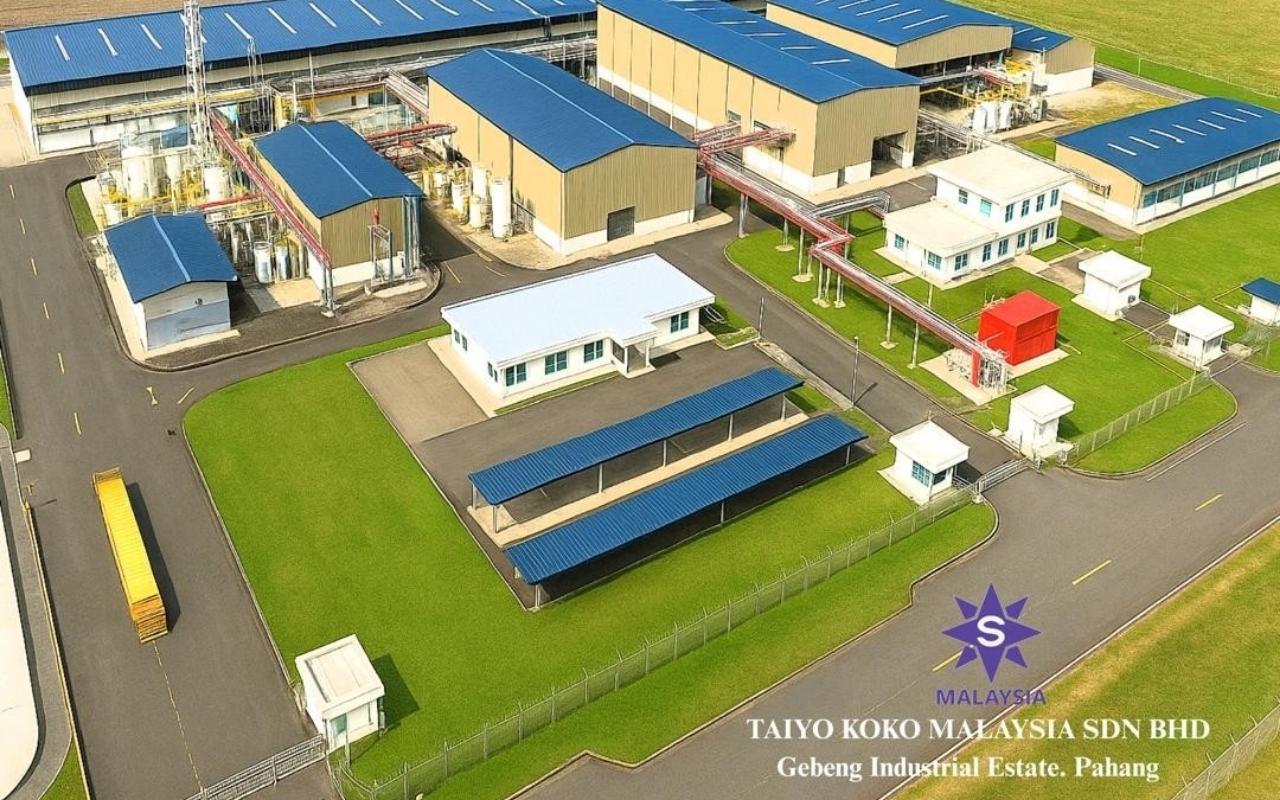
Rendering of the plant currently under construction in Malaysia.
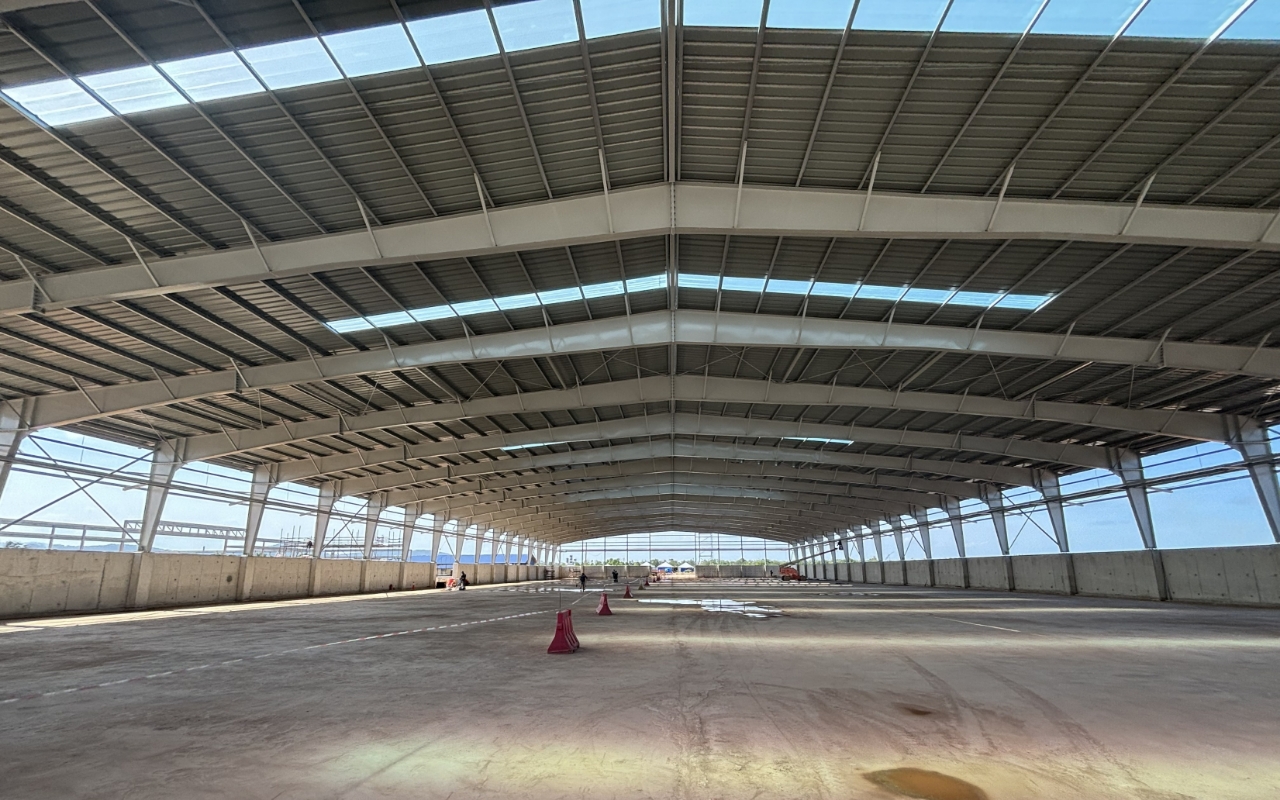
The spent catalyst storage area at the Malaysia plant can hold 2,000 tons.
The aim of this expansion to Malaysia also included increasing procurement of raw materials through catalyst recycling, but the path there was anything but smooth. After learning some ten years ago that Malaysia would build a state-operated oil refinery for heavy crude from the Middle East, the company sought opportunities to enter the market on several occasions. Malaysia prohibits the export of scheduled industrial waste, requiring separation and recovery to be done within the country. A local company was initially entrusted with this, but there were setbacks. The Malaysian government then recognized Taiyo Koko's expertise in recycling technology, enabling the company to proceed with investment in the plant.
SUZUKI recalls that support from both the Japanese and Malaysian governments was instrumental in the decision to move forward with the project. The loan from JBIC not only financially supports the plant's construction but also reinforces the Malaysian government's trust in the company.
"Catalyst recycling has a smaller impact on the environment than land excavation to develop mines. And, as our company has the technology to properly treat wastewater and exhaust gases, we are also highly regarded for complying with Malaysia's strict environmental standards and for contributing to the creation of a circular economy."
Turning this new challenge in Malaysia into
an opportunity for sharing expertise
The Malaysian plant is located on an approximately 80,000-square-meter site, with plans to recover about 150 tons of molybdenum and 400 tons of vanadium annually. In addition to several employees assigned there from Japan, the company is hiring about 50 local staff. The company has already brought some of those local hires to Japan for technical training.
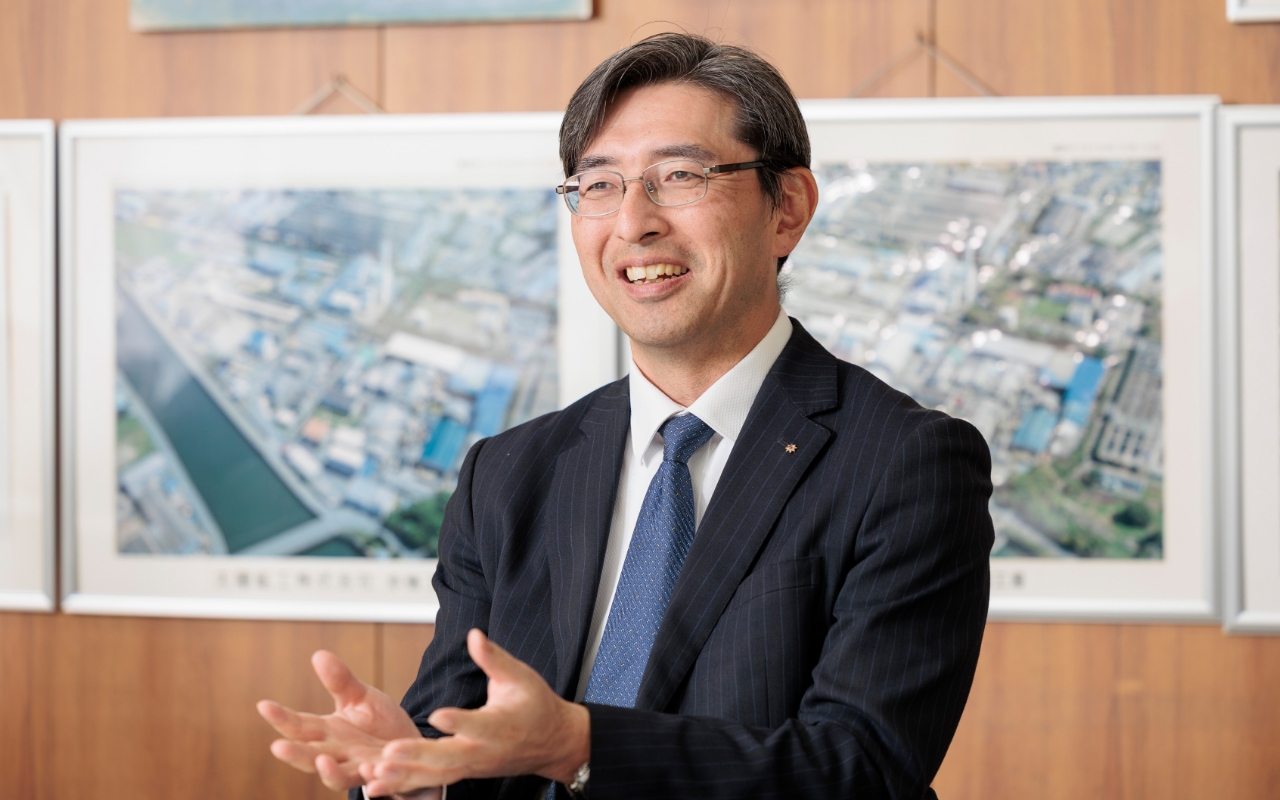
"I want to nurture young talent through their experience in Malaysia and pass on skills," says SUZUKI Kazufumi, Taiyo Koko's president.
Another goal of the company's overseas expansion is to cultivate young talent. The company is at the stage where the experienced employees who developed the proprietary technology are reaching retirement age. Thanks to that technology, today's young employees can carry out their work without having to gain the same level of experience as their predecessors.
"Various challenges and difficulties will probably be encountered in our new venture in Malaysia," says SUZUKI. "I hope that by being put to the test there, our younger employees will gain experience and knowledge to develop their skills. And I want that knowledge to be passed on to the next generation."
SUZUKI, who became president in 2018, formerly worked at a trading company, where he spent three years posted in Malaysia. He hopes to give the next generation the same opportunity to grow that his own experience abroad gave him in his younger years.
"What's important is to keep creating things that the world needs—accurately identifying what society demands now and addressing those needs promptly. And we want to continue to be a materials manufacturer that will always be needed."
The new undertaking in Malaysia to ensure a stable supply of rare metals is the very embodiment of this philosophy. It's also the groundwork for this century-old company to thrive for the next 100 years.
Taiyo Koko Co., Ltd.
| 1919 | Taiyo Soda Co., Ltd., whose name was changed to Taiyo Industrial Co., Ltd. in 1939, founded as a subsidiary of Suzuki & Co., Ltd., a general trading company |
|---|---|
| 1949 | Dissolution of Taiyo Industrial Co., Ltd. under the Enterprise Reorganization Act; Taiyo Koko Co., Ltd. established |
| 1952 | Start of production of ferromolybdenum |
| 1954 | Start of production of ferrovanadium |
| 1978 | Commercialization of technology for recovery of molybdenum and vanadium from spent catalysts |
| 2027 | Recycling plant for spent catalysts scheduled to begin operations in Malaysia |


In June 2025, a loan agreement was signed with Taiyo Koko Malaysia Sdn. Bhd., the Malaysian subsidiary of Taiyo Koko, for up to JPY3 billion (JBIC portion). Co-financed with private financial institutions, the total loan amounts to JPY9.2 billion. By supporting the overseas business expansion of Taiyo Koko, JBIC is helping to build a circular economy in Malaysia and to protect the global environment.