



Feature ArticleBIOFUELS FOR ENERGY SECURITY
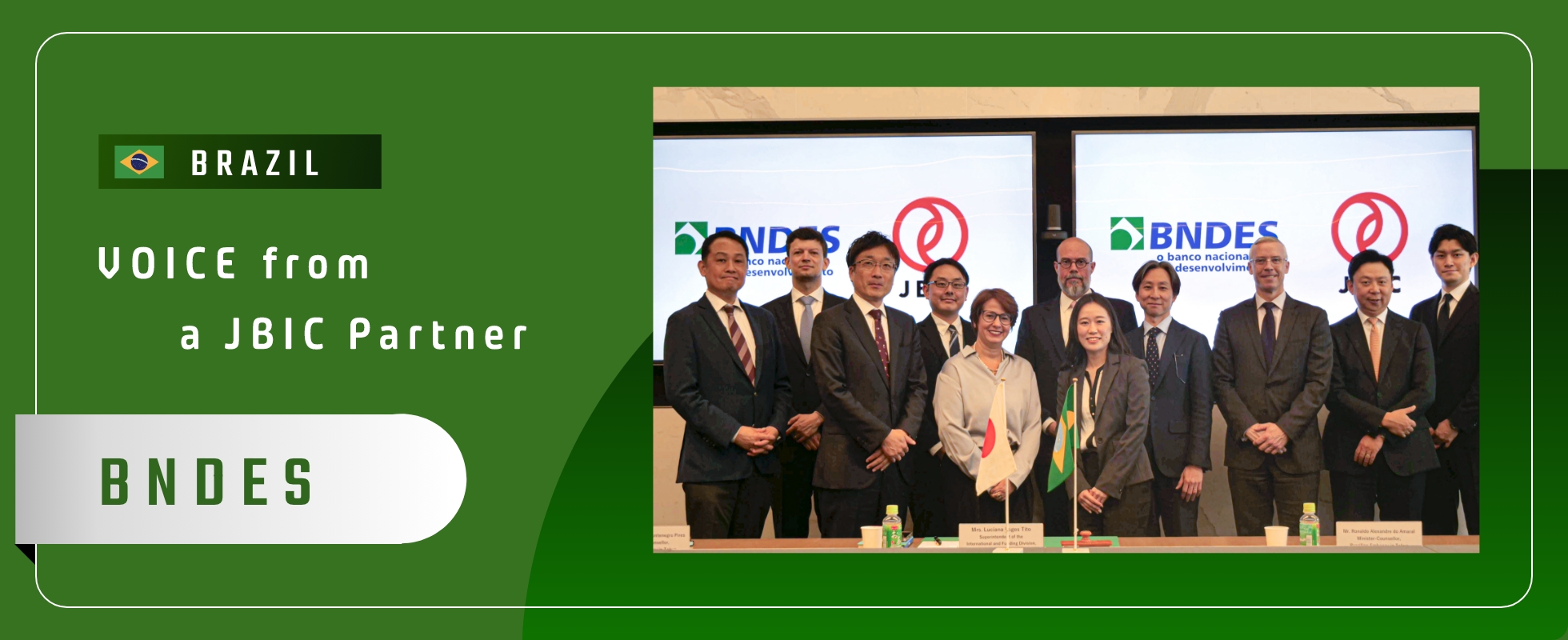

At the signing ceremony for the seventh JBIC-BNDES credit line. Representatives from Citibank and the Embassy of Brazil in Tokyo also in attendance.
Given that Brazil is the world's second-largest biofuel producer, it is little wonder that its national development bank BNDES is a dedicated supporter of Brazil's role in the energy transition. Brazil's principal long-term lender is channeling capital into biofuel projects and looking to build on its long-term partnership with Japan and JBIC.
"BNDES is focused on decarbonization and innovation," says Mauro Mattoso, head of BNDES's Agri-Food and Biofuels Complex Department. "When we talk about energy transition, we talk a lot about decarbonization: trying to produce and introduce renewable energy in our economy. That is why we are looking for innovation in this sector."
At the heart of these efforts is Brazil's Climate Fund, operated by BNDES on behalf of the federal government. Despite political shifts, the energy transition remains a national priority.
Demand growing exponentially
"Our disbursements since 2023 have been four times higher than in previous years," explains Artur Milanez, sectorial manager of BNDES's Agri-Food and Biofuels Complex Department. "The priorities won't change, but when you have more incentivized instruments, demand for our resources changes a lot."
That demand is being met by an unusually flexible toolkit.
"We can provide long-term loans—up to 16 years—and are more willing to take risks than commercial banks, which are often less interested in technologies that have long paybacks," says Mattoso.
BNDES's portfolio to date includes funding second-generation ethanol plants that turn sugarcane bagasse into fuel; an ethanol pipeline more than 1,000 kilometers long running from the center-west to Sao Paulo; and the flex-fuel engine, which was launched in 2003 and now represents around 80 percent of our fleet.
"We have even financed vehicles," says Mattoso. "We are now working to finance tractors that run on ethanol, and other things related to consumption as well as production."
Milanez emphasizes the breadth of their approach: "Any investment that brings new technologies, efficiency, capacity improvement, or modernization—we can help companies invest," adding that sustainable aviation fuel (SAF) is the next frontier, with Japanese companies showing firm interest.
Beyond batteries
"We have launched a public call to assess the market," adds Mattoso. "And we have spoken with some Japanese companies that are interested in developing a Brazilian SAF industry. We believe this is a very important way to decarbonize the aviation sector—really the only way—because it is very difficult to fly an airplane on batteries."
The other strategic pillar BNDES wants to build with Japanese partners is bio-electrification: pairing ethanol with electric drivetrains, pioneered commercially in Brazil by Toyota. Since the successful launch of the groundbreaking flex-fuel vehicle models in the country, other automakers are developing their own hybrid vehicles.
Milanez argues that bio-electrification offers a practical alternative for emerging economies, reducing reliance on large batteries and extensive charging infrastructure. "When you combine ethanol with an electric engine, you don't need a large battery."
He believes future hybrid vehicles could achieve driving ranges of more than 1,000 kilometers.
And the opportunities extend far beyond aviation and automobiles. "Many Japanese companies are interested in ethanol-related businesses, including trade, chemicals, and production equipment," he says. "As more countries invest in ethanol production, new opportunities will emerge for Japanese companies as well."
Open for business
And for those considering investment, from Japan or elsewhere, BNDES is ready to facilitate. "BNDES has also funded Japanese companies operating in Brazil to develop technology here," Milanez notes. "Once a company is established in Brazil, BNDES treats it as a Brazilian company."
Underpinning this work is a relationship with JBIC, one of BNDES's leading international partners. Since the 1960s, the two institutions have signed numerous loan agreements. But Milanez believes there is much more to come. "JBIC funds have helped us a lot to support more investments and more projects in Brazil, so we are very thankful for that, and we should keep it going."
Asked why biofuels have not been more widely adopted, given their many apparent merits, Milanez asserts that it is partly an image problem: "Batteries have much better PR than biofuels," he says with a smile. "If biofuels had the same PR as batteries, ethanol would already be a global commodity."
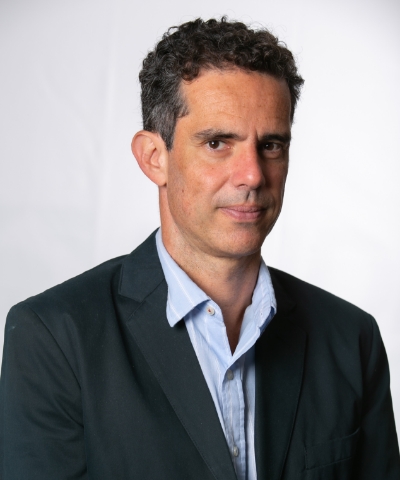

Head of the Agri-Food and Biofuels Complex Department, BNDES
MAURO MATTOSO
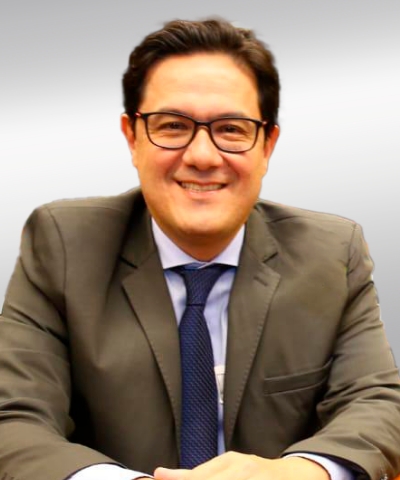
Sector Manager of the Agri-Food and Biofuels Complex Department, BNDES
ARTUR MILANEZ

